
We use cookies to allow our website to function properly, personalize content and ads, provide social media features, and analyze traffic. We also share information about your use of our website with our social media, advertising, and analytics partners.
2021-02-03
Chen Lianqiao X Wei Rujun
PRESENTER
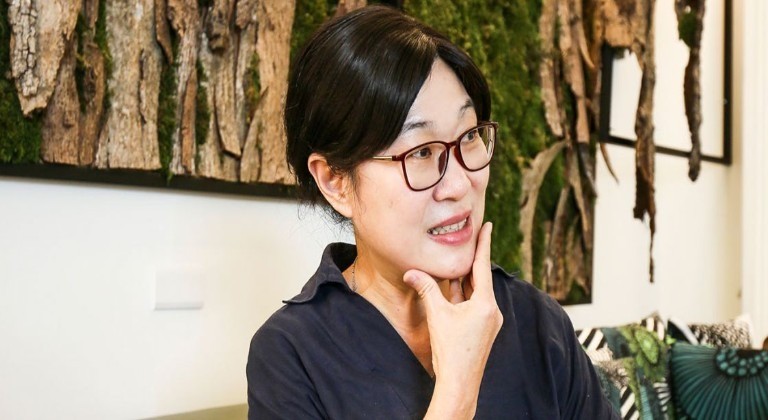
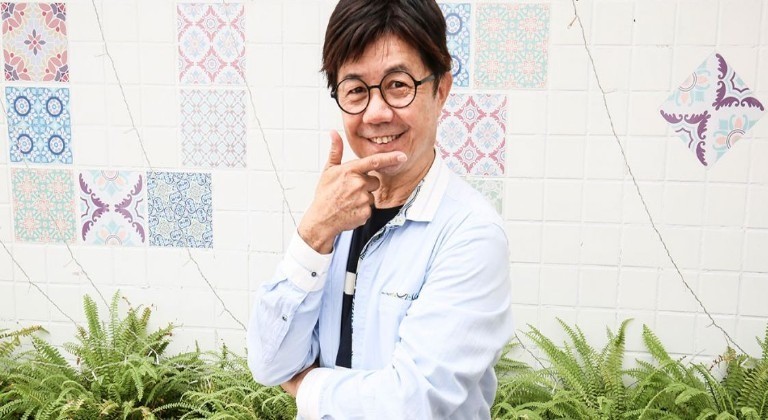
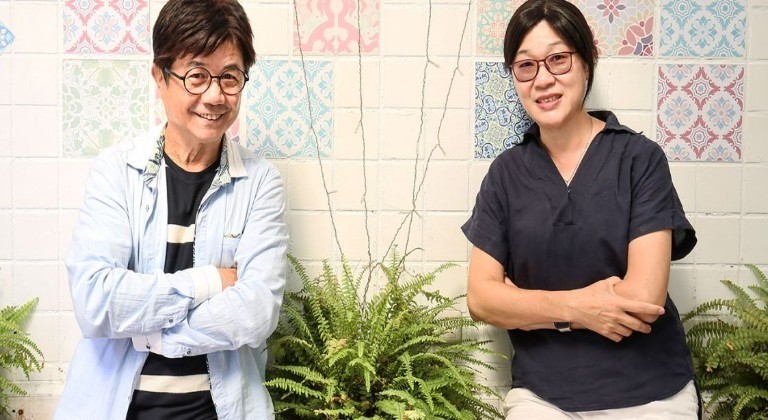
Chan Lium-kui
Golden Bell Award-winning sign language prankster
He lost his hearing at the age of three after suffering from a fever and became Deaf. While studying at Taipei School for the Hearing Impaired, he already showed a talent for performing. His humorous personality and lively expressions and gestures made him the sign-language host of Public Television Service’s *Listen and See*, and he has won the Golden Bell Award for Best Host twice. He is also an immensely popular leading sign-language instructor. His classes are always filled with laughter, helping hearing and Deaf people bridge the language gap and connect with one another—leaving no distance between them.
Facebook: www.facebook.com/profile.php?id=100002049886562
Wei Rujun
A Sign Language Interpreter with Multiple Hats
After joining the sign language club at university, sign language went from an extracurricular activity to her major. She became one of Taiwan’s first certified sign language interpreters and a producer of the Public Television Service program *Sign and See*. At age 50, she founded the Taiwan Sign Language Interpreters Association, organizing a range of creative sign language training and outreach courses, publishing sign language books for parents and children, and producing sign language instructional videos. She enjoys being a multi-hyphenate interpreter whose work grows from her expertise in sign language.
Facebook: www.facebook.com/profile.php?id=100000098947501
Q & A
Q: How do you start your day?
Lianqiao: After getting up, I first tidy up the house, then make a cup of coffee to wake myself up and check that all the materials I need to prepare for the day’s lessons or program are complete.
Ru-Jiun: After waking up at around 5 or 6 every morning, I start preparing “green smoothies” for the whole family. About three years ago, I began experiencing some health issues, so I made a few changes to my diet and try to keep breakfast simple and healthy. Green smoothies are convenient: they let me quickly consume plenty of fruits and vegetables, and they take very little effort to prepare, helping me recharge for the day.
Q: Where do you usually hang out?
Lianqiao: The places I go to most often are Ningxia Night Market and Dadaocheng, since they’re nearby and close to home. Sometimes I’m too lazy to cook dinner, so I go there to eat—it’s convenient, with lots of options. Besides, everyone wears masks these days, so no one can recognize me anyway! (laughs)
Ru-Jun: Because of my work, I’m often traveling all over Taiwan. Even on weekends, I’m moving around different districts of Taipei to teach courses for the sign language interpreters’ association. I think the place I’m most often found is probably a metro station.
Q: Which restaurant do you go to most often?
Lianqiao: My hometown is Zhongli. I lived in a military dependents’ village when I was little. It was later demolished, and we moved nearby. Whenever I go back to my hometown, I make a point of taking the bus to Zhongzhen New Village to eat Guoqiwu rice noodles and reminisce about life in the village. The assorted rice noodles at Guoqiwu are incredible value for money—the whole bowl is packed with toppings.
Ru-jun: Northern-style noodles and red bean desserts are my irresistible favorites. I especially love red bean cakes and red bean paste pancakes.
-
The red bean paste pancake at Wan Zhen Lou in Beiping is highly recommended. The chewy pancake skin is packed with red beans—you could eat several slices!https://www.facebook.com/%E8%90%AC%E7%8F%8D%E6%A8%93-938035889609430
-
At the mouth of the alley, Wangnian Dumplings, near Zhongshan Junior High School MRT Station, serves rice, noodles, and other noodle dishes. The most frequently ordered item is the tomato soup dumplings.https://www.facebook.com/handmadedumplingfun/posts/3068516803228741
Q: What do you do for fun after work?
Lianqiao: I like taking a stroll around Dadaocheng, or exercising by the riverside. Sometimes I go to the library to read the newspaper (laughs).
Ru-Jun: “For me, power walking is a very relaxing activity. I set a goal of 10,000 steps a day, and I go power walking at a park or on a school track almost every evening.”
Q: Teacher Ru-jun, what are some memorable experiences you’ve had while working as a sign language interpreter?
Ru-Jun: Being a sign language interpreter gives you a sense of accomplishment. Through us, our friends with hearing impairments can connect with the world. That sense of accomplishment and mission keeps us immersed in this role.
The most memorable thing was when a Deaf friend told me how grateful she was to sign language interpreters. Thirty years ago, a family member of hers who was also hard of hearing was involved in an accident. Without a sign language interpreter, the whole family was left in a tragic situation. She told me that things would certainly have been different if there had been an interpreter at the time. It made me deeply realize how important our profession is.
Usually, interpreters only find out who they’ll be interpreting for once they arrive at the venue. Sometimes you show up to interpret and realize the person is a friend you know well—that can be a real shock! I feel that sign language interpreters are often involved in the lives of Deaf friends, but at the same time, we must uphold a strong sense of professional ethics and make sure Deaf friends don’t feel that their privacy is being invaded.
Q: What made you choose sign language interpreting as a profession?
Ru-jun: I love this language. I think sign language looks so beautiful in the air!
I remember being fascinated by sign-language songs on TV when I was in secondary school. When I saw there was a sign language club at university, I signed up. I’ve always had a natural fondness for sign language. Sign language is a visual language, and I’m better at learning visual languages than auditory ones. In particular, once I became more familiar with sign language, the joy and sense of achievement I felt from being able to help Deaf friends made me realize the value of my own existence.
Q: This profession is relatively uncommon in Taiwan, and the benefits and working conditions are inadequate. Have you ever thought about giving it up?
Ru-jun: Indeed, there is relatively little security in Taiwan. Sign language interpreting fees in Taiwan are funded by government subsidies, and everyone is competing for a share of that limited funding. As a result, very few people work as full-time sign language interpreters; most do it part-time because they still need to rely on the income from a regular full-time job. I pursued sign language mostly out of interest. This is work I truly love, so I will never give it up.
Q: Mr. Chen, besides hosting, you’re also a master of mime. How did you discover you had this talent?
Liam: When I was studying at a school for the deaf, I saw a dance performance. The dancers’ expressions were so vivid that I could feel their joy, and it really moved me! Later, I saw the National Theater of the Deaf (NTD) perform “The Human Camera.” The performers used their bodies to portray different scenes, switching between playing several characters and becoming the narrator. This style of performance is very well suited to deaf people. So I started practicing acting, physical performance, and so on…
Q: You also perform with the Mixed-Ability Variety Troupe. What kind of feelings do you hope to inspire in the audience?
Lianqiao: I hope the public can learn about and value Deaf people through my performances. We’re no different from anyone else—we can do anything.
Q: Whenever I see Teacher Lianqiao, he always has a smile on his face and seems so happy. How does he maintain that?
Lianqiao: I’ve been pretty optimistic all my life. Happiness is contagious—as long as I keep a cheerful mindset, the atmosphere around me changes too. Sometimes I have negative emotions, but just thinking that I can bring joy to everyone makes me happy!
Q: What’s a book you’ve read recently? Did it leave you with any insights or impressions?
Lianqiao: “The Worry-Relief Laugh Shop,” Ba Nai Shunzi’s doodle diary, is illustrated and funny. After work, I feel like reading something light, and the jokes in it can also be material for performances. There’s a passage I really like: “Don’t take life too seriously; don’t be too fussy about everyday things. Let’s laugh together, laugh out loud together~ The ups and downs of life turn out to be a free tonic!”
Ru-jun: Almost all the books I read are related to sign language and hearing impairment. Because of my work, sign language has become inseparable from my everyday life. Inspired by the American sign-language communication picture book *MY FIRST BABY SIGNS*, our association recently created an interactive handmade book. By engaging with and manipulating the book, children can become more interested in learning. The book’s mechanisms, graphic design, and illustrations were all created by deaf friends, bringing together each person’s strengths. I really enjoy the process of asking questions and listening; without even realizing it, I grow along the way!
Q: What do you find most interesting or appealing about Taiwan?
Lianqiao: The Taiwanese landscape that appeals to me most is Zengwen Reservoir. The mountains and forests surrounding the reservoir are very peaceful and serene. It’s a bit of a journey to get there, but when the weather is good, you can take a boat ride on the lake and admire the reservoir’s beautiful scenery from a different perspective.
Zengwen Reservoir Recreation Co., Ltd.http://www.godapu.com/
Ru-Jyun: I love Taiwan’s mountain scenery and rice fields. Every year, I arrange a family cycling trip in Hualien and Taitung, riding from Hualien to Taitung. The whole journey offers breathtaking, expansive views of nature, with rice fields lining the way and mountain peaks rising in layers in the distance. The uphill and downhill stretches along the route are like life’s ups and downs—sometimes challenging, sometimes smooth. There are two routes I highly recommend: one is the Yufu Bicycle Path from Yuli to Fuli, the only cycling path that crosses two tectonic plates; the other is Hualien County Road 193. Both are distinctive local cycling routes!
East Rift Valley National Scenic Area_Nine Main Roadshttps://theme.erv-nsa.gov.tw/bicycle/Article.aspx?a=123&l=1
Q: What do you look forward to most when staying at an inn?
Lianqiao: When staying in a room, having a window that faces outdoors is a big plus. After that, cleanliness is important, and the style should be simple rather than complicated.
Ru Jun: Having a quiet place to stay is very important to me! The thing that bothers me most when staying away from home is noise, especially since you can’t tell from photos on a website how good the soundproofing is.
Q: What is your impression of the hotels under Taipei Inn?
Lianqiao: I once passed by Tianjin Street and was drawn to the artwork on the windows. Only later did I find out it was your family’s inn! Its all-white exterior and animal decals on the windows look especially fresh amid the streets of old Taipei.
Ru-Jun: I happen to live near your Fuxing North Road location. I remember being impressed by the lobby when I passed by before—it has a grand, minimalist design that still feels welcoming.
Related information
2024-05-22
Chen Shilin
Chen Shih-lin, founder of ISM Sweets and guest principal cellist of the band Bend Voice, turned to the dessert career he loved most at the age of 32. He studied culinary arts and baking in Canada and Japan, and from 2013 to 2014 worked and furthered his training at 16-ku, a renowned French patisserie in Fukuoka, Japan, under Japanese pastry master Takao Mikamo.
2024-05-21
Huang Boxun
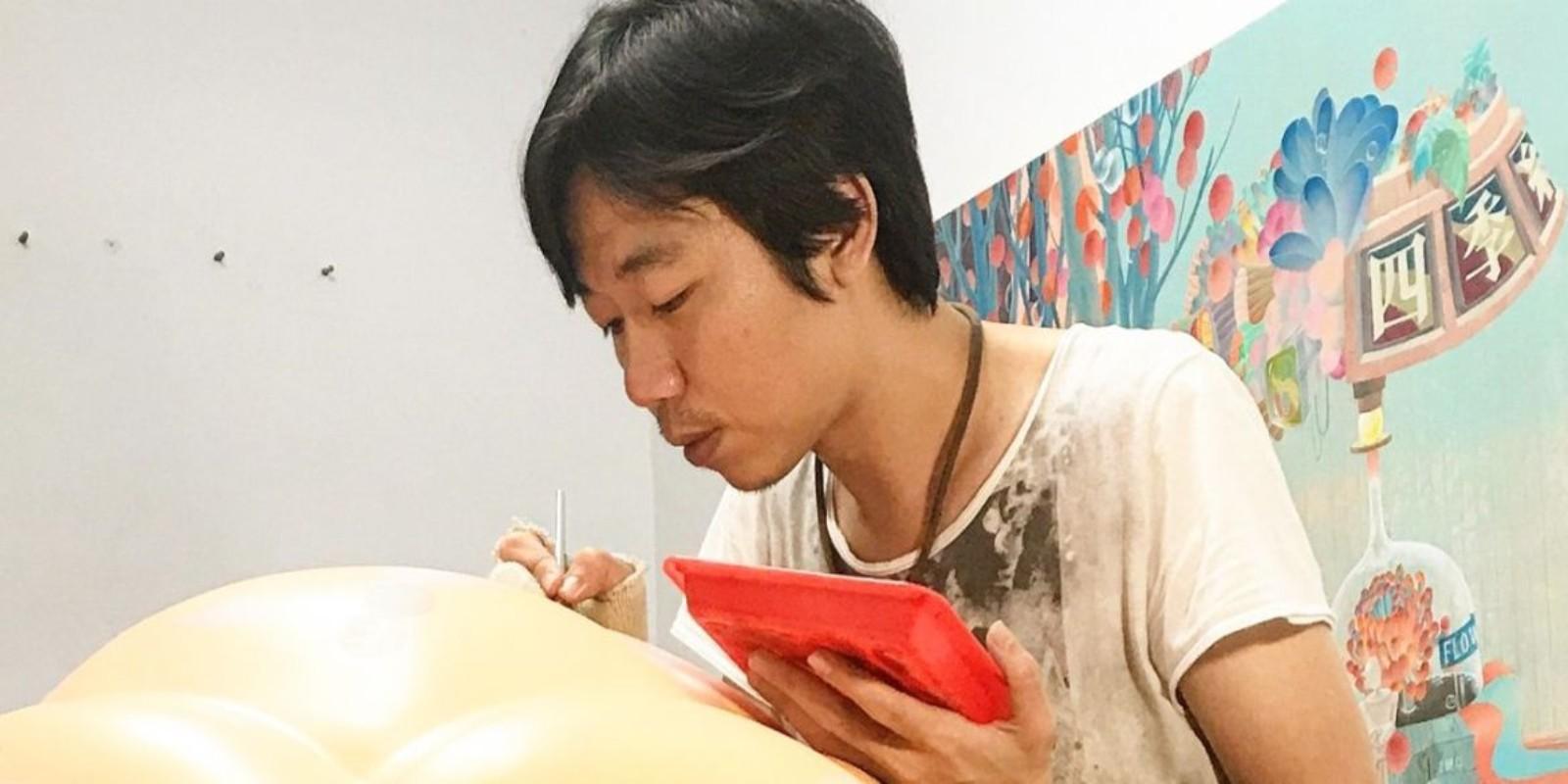
Using “richness” and “freedom” as the two central themes, explore the relationship between oneself and one’s living environment, portraying a world that is both rich and lonely, with vivid, colorful scenes.

2022-01-20
ANO (A-Nuo)
Taiwanese graffiti artist ANO (A-Nuo) considers video games, science, and graffiti indispensable sources of inspiration and integral parts of his life. He first encountered graffiti through skateboarding in junior high school, and since then, his life has been inseparable from graffiti art.
- Add No. 2, Lane 728, Sec. 6, Zhongshan N. Rd., Shilin Dist., Taipei City 111
- Mail dandytianmu@taipeiinn.com.tw
- Tel +886-2-28732222
- Fax +886-2-28772277